Monday, January 2, 2023

FOLK DANCE BAGURUMBA OF ASSAM (UPDATE 2023)

Folk Dance Bagurumba Of Assam 


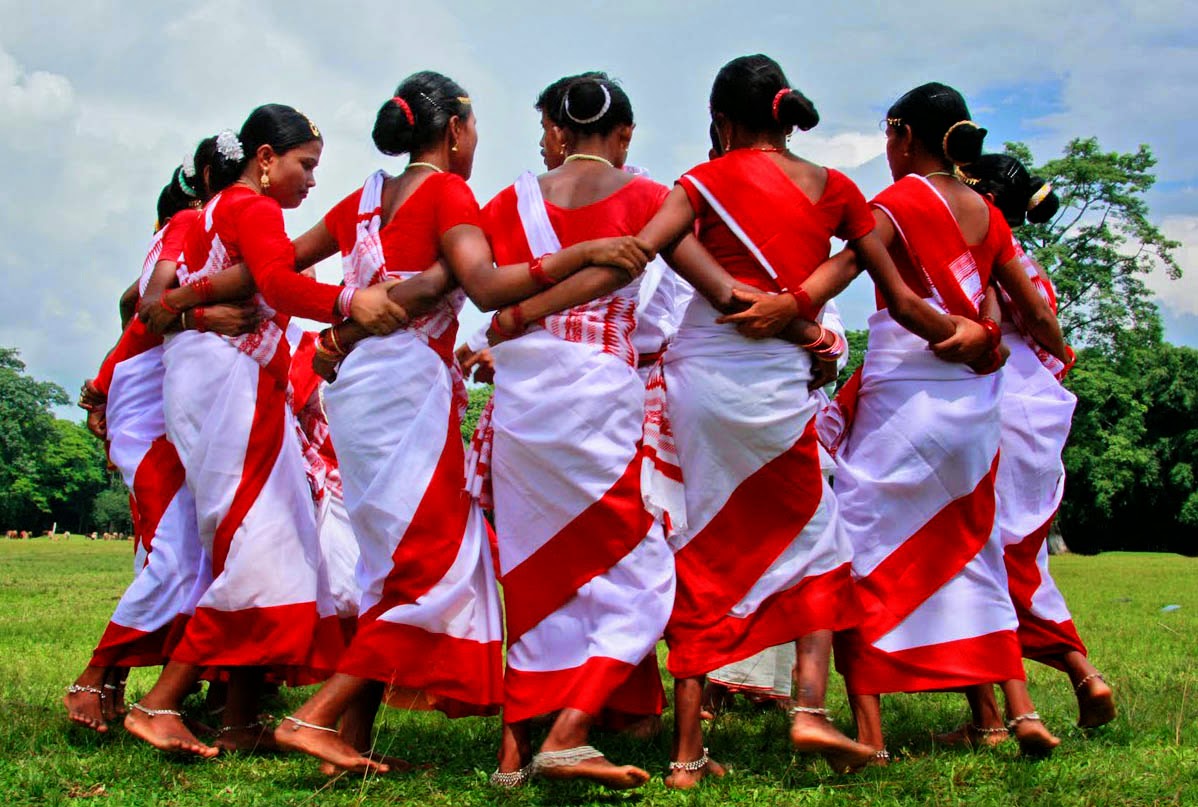
The north-eastern state of Assam is home to many tribal communities. Located in the south-eastern flank of Himalayas, Assam is incredibly rich in history, culture and biodiversity. There are three groups of people that form the entire population of the state: the tribal, the non-tribal and the scheduled class people. Seventeen different tribes constitute the ethno-diverse tribal community that merged in the population from times beyond. Some of the notable tribes include the Bodos, the Mishing tribe, Deori tribe, Rabha tribe, Karbi, Nagas and the Garos. Bagurumba dance is performed by Bodo community, the Aboriginal people derived from Tibeto-Burman settlers in the state.

Bagurumba folk dance

Bagurumba - Festivals of Boros


The initial use of the term ‘Bodo’ was to refer certain linguistic group used by B.H. Hodgson during the year 1847 and the language was gradually assigned to certain inhabitants who spoke that dialect. Thus the ethnic community came to be known as the Bodos who are also popular as the Kacharis. The term ‘kachar’ denotes the area close to the river. The famous spring time dance of Bodos is called Bagurumba dance. The dance offers a ritualistic homage to the deity of Bodos and enacted with vivacious spirit and craftsmanship. It is one of the most joyful experiences of Bodo community whose hard work and toil ultimately welcomes this much awaited glorious performances of dance and music.

Bagurumba - Festivals of Boros

Bagurumba Dance Videos - Assam Folk Dance

History

Bodo dance goes by the sobriquet of ‘butterfly dance’ since the dance movement resembles the motion of butterflies. Though the dance form has been existing since pre historic times, there is not much recorded evidence of it anywhere. Bodo-Kacharis of Assam worship revered God Bathow Bwrai who is their equivalent of Lord Shiva among Hindus. During the auspicious eve of Bishuba Sankranti which usually occurs in the middle of April, the holy Bathow is rendered with chicken and zou ( rice beer ). After the homage, Bodo women perform their ritualistic dance wearing gorgeous dokhna, colorful jwmgra and aronai moving gracefully with the music. Some also refer to the dance form as Bardwisikhla dance. The splendid dancing score of young girls performing the dance can be seen in Bodo occupied areas such as Kokrajhar, Nalbari, Darrang, Bongaigaon and Sonitpur districts.
Bagurumba Dance of Assam - Beautiful Indian Tourist Spots

Bagurumba

Musical Instruments

Most of the traditional Bodo instruments are given below that are used to accompany the Bagurumba dances.
Siphung - It is a long five-holed flute that produces much lower notes than the regular North Indian flutes. It is also made of bamboo.
Serja – It is a bowed instrument that has a basic design with a circular resonant body and a forward facing scroll.
Tharkha – it is a piece of split bamboo used for percussion.
Kham – This is a longitudinal drum.
Khawang – These are a pair of small cymbals held together with a rope. It is similar to a Namghar.
Bodo's Bagurumba Dance, Bodo's Bagurumba DanceTroupes,Bodo's

Folk Dance Bagurumba Of Assam

Significance

As per the Bodo mythology, the Bagurumba dance is favored by a supreme deity called ‘Bathou’ represented by the Sizu Plant that belong to the Euphorbia Genus. The nature of the dance is peaceful and yet it represents the vitality of the spring. The origin of the Bagurumba may be found in the original naturalistic beliefs of the Bodo tribes, as its few songs are just simple images of nature.
History of Bagurumba Dance

Bagurumba Festivals Of Assam

Variations


There are only two variants of Bagurumba that are Natural and Royal Bagurumba.
While the Natural Bugurumba is performed with only instrumental music, the Royal Bagurumba performances incorporate songs and vocalist music.
Bagurumba Dance - Assams

Bagurumba Bodo Tribal Dance Assam

JHUMUR NAACH OF ASSAM (UPDATE 2023)

JHUMUR NAACH OF ASSAM

Jhumur Nach is a famous dance form in Assam performed by boys and girls, usually tea workers working in the sprawling tea gardens of Assam. The dance form is quite appealing. The dances are performed during the autumn season in Assam. This dance is also found in few parts of West Bengal. The tea tribes of Assam state is an oldest tribe of this state, which has completed almost more than 100 years.
                              This tribe had been introduced the new dance form, which is known as Chah Baganar Jhumar Nach or it is also known as tea garden's Jhumar dance. Accuracy of footsteps with tight clasping on both person's waist is very difficult; but in visualization, it looks beautiful. During the trip of Assam, when one sees the tea garden, he will get the chance to see this dance performance and would be witness of this dance.
Indian Folk Art's, Paintings And Culture: Jhumur Nach of Tea Garden

Tea garden workers perform Jhumur dance - Assam


The dance gets its name from the cluster of bells worn round the ankles, which make a clanging noise. There are many variations of Jhumur. This dance is sometimes performed as a ritual worship of gods and goddesses, sometimes for courting and lovemaking, and yet again as a prayer for rainfall. This dance incorporates songs and dialogues, which depict the joys and sorrows, yearning and aspirations of the everyday lives of the common people. It is believed that Jhumur was originally a means of recreation between phases of tedious agricultural work. Probably the most entertaining form of Jhumur is the Bhaduria, performed as thanksgiving for a bountiful monsoon.

Jhumur Naach

Jhumur Nach of Tea Garden Workers Dance

Jhumur Nach of Assam

Jhumur Naach Music


Musical Instrument Used in Jhumur Nach :-

Generally a drum, hung on shoulder; a flute and a pair of "Taal" (two metallic discs) are the main musical instruments in the dance.

The lyrics of Jhumur are built on day-to-day languages and mostly depict love and or pleasures and pains of day-to-day life
Folk Dance In India | Folk Dance In Assam | Folk Dance In Jhumur

Jhumur dance of Assam


Costumes of Jhumur Nach Dance:-


The costume worn by the jhamur dancers is different from the other traditional costumes. The male members wear long traditional dresses and woman wear sarees with broad boarders. The dress is simple yet colourful.
Jhumur Dance | Jhumur Dance of Assam

Jhumur Dance Of The Tea Tribe Assam

BIHU DANCE MOST POPULAR FOLK DANCE OF ASSAM( UPDATE 2023)

Bihu dance most popular folk dance of Assam


Bihu dance
Indian Folk Dance: Bihu Dance

The Bihu dance (Assamese: à¦¬িহু নৃত্য, Hindi: à¤¬िहू नृत्य) is a folk dance from the Indian state of Assam related to the Bihu festival. This joyous dance is performed by both young men and women, and is characterized by brisk dance steps,and rapid hand movement. Dancers wear traditionally colorful Assamese clothing.

Bihu Assamese dance classes
Bihu Dance Performance
Folk Dances Of India - Indian Folk Dances BIHU DANCE
Bihu Dance of Assam

The Bihu is a group dance in which males and females dance together but maintain different gender roles. In general, females follow stricter line or circle formations. The male dancers and musicians enter the dancing area first, and they maintain their lines and follow synchronized patterns. When the female dancers enter later the male dancers break up their lines to mingle with the female dancers, who maintain their stricter formations and order of the dance. The dance is usually characterized by definite postures; movements of the hips, arms, wrists; twirls, squats and bends but no jumps. Male and female dance movements are very similar, with only minor but subtle differences.
Bihu dance is the most popular folk dance of Assam
 Bihu Dancing School Lessons
Assamese Bihu Dance
Mukuli bihu dance performance at Guwahati Assam

The dance is performed in accompaniment with traditional Bihu music. The most important musicians are the drummers (dhulia), who play a particular twin-faced drum, the dhol, slung from the neck and played with one stick and a palm. There are usually more than one dhulia in a performance, and they play different rhythms and compositions at different sections of the performance. These rhythmic compositions, called seus, are traditionally codified. Before entering the dancing area, the drummers play a short and brisk rhythm. The seu is changed and usually the drummers enter the dance area in line. 
Bihu Dance - Classical Dances Of India,Folk Dances Of India
Rongali Bihu: Signatory to Assamese Culture
Bihu dance and other popular folk dance forms of Assam
rongali-bihu-festival-dance-assam-india

The mohor xingor pepa is played generally in the beginning by a single player who lays out an initial plaintive motif and that sets the mood for the dance. The male dancers then enter the area in formation and perform accompanied by singing, in which all participate. Some other instruments that accompany this dance are the taal, a type of clash cymbal; the gogona, a reed and bamboo instrument; the toka, a bamboo clapper; and the xutuli, a clay whistle. Bamboo flutes are also often used. The songs (bihu geet) that accompany the dance have been handed down for many generations. The subject of the lyrics ranges from welcoming the Assamese new year to describing the daily life of a farmer, from historical references of invasions to Assam to contemporary socio-political commentary in a satirical way. Though both males & females perform Bihu dance, but female performed bihu dance has more variations. There are many stages in female performed Bihu dance — freehand, twisting, with rhythm pepa blowing, with Kahi (disk), with Jaapi (Assamese headgear) etc. 

Bihu Dance  Assam Classical Dance
Bihu Famous Traditional Folk Dances of Indian States
Bihu Dance: Assam Most Popular Classical and Folk Dance
The Bihu dance is a folk dance from the Indian state of Assam 

forms of bihu dance

The dance takes several forms among the different northeast Indian groups, e.g. "Deori Bihu dance", "Mising Bihu dance" etc. However, the underlying goal of the dance remains the same: to express the desire to feel both pain and happiness..

rongali bihu competitions


In mid April, along with the onset of spring, falls the new year in the local calendar with the month of Bohag. Nowadays, during this period, there are Bihu competitions all over the Assam (as well as throughout the major locations with Assamese diaspora. These competitions attract visitors and locals alike in huge throngs. Apart from Bihu dance, there are competitions held to select the Bihu Kunwori (Bihu Princess) and various singing talents.

DANDIYA RAAS IN NAVRATRI FOLK DANCE OF GUJARAT (UPDATE 2023)

DANDIYA RAAS FOLK DANCE OF GUJARAT  

Raas or Dandiya Raas is the traditional folk dance form of GujaratIndia, and is associated with scenes of Holi, and lila of Krishna andRadha at Vrindavan. Along with Garba, it is the featured dance of Navratri evenings in Western India. During Navratri festival, in most of the cities of Gujarat people gather and perform Garba dance - an event that is becoming increasingly popular in countries with large Gujarati-speaking communities around the world, such as Canada, the United States and the United Kingdom.

Dandiya Raas

Dandiya Raas - Dandiya Raas Gujarat, Dandia Dance Gujarat India

Dandiya - Indian Folk Dance , Dandiya Raas, Dandiya Raas in ...

Among the several forms of Raas, the most popular one is "Dandiya Raas", which is performed during Navratri. In fact, it holds a significant place in Navratri celebrations. It is known for setting the festive mood. Dandiya Raas is the featured and most popular dance of Navratri evenings in Gujarat. The dance form is not just restricted to Gujarat. It is performed in many other states, during the festive season of Navratri. Dandiya Raas is performed in the honor of Goddess Durga. It is the dramatization of a mock fight between the Goddess and Mahishasura - the mighty demon-king. The sticks of the dance represent the sword of Durga. Women normally perform it in a graceful and rhythmic manner in a circle as they 

Dandiya:The Great Indian Social Dance

Dandiya Folk Dance of Gujarat

Traditionally, Dandiya Raas is performed after aarti (ritual of worshipping the diety). Hence, Dandiya Rass is an important part of the merriment. The special characteristic of the dance is the colorful costume worn by the dancers and the colorful sticks carried by them. Both men and women love to be seen dressed in their best traditional attire. The women wear traditional dresses such as colorful embroidered choli, ghagra and bandhani dupattas glittering with mirror work and heavy jewellery, while men look very attractive in their traditional colorful kedias. The dresses for the dance were stitched in until sometime back, when readymade outfits started appearing in the shops,especially for Dandiya Raas. 

Classical Dances Of India,Folk ...

Dandiya Raas, Dandiya Raas In Navratri, Garba, Dandiya In Navaratri

The colorful sticks, used as prop of Dandiya Raas, are usually made of bamboo. This is the reason why it is also known as 'stick dance'. The circular movements of Dandiya Raas to some extent are very complex, which can be done only with skill in the art form. The dancers strike the sticks with their partners and dance in circular motion, to the rhythm of the music played in the background. A large number of people are involved in Dandiya Raas and two circles are formed by the dancers.
Dandiya Raas Special,

 Navratri Garba & Dandiya Raas 2016 Tickets

Out of the two circles made to perform Dandiya Raas, one of the circles revolves clockwise, while the other revolves anti clockwise. The dance is a very lively, active and fast paced art form, thus leaving no scope for laziness. There is an instrumentalist, playing a 'meddale' drum, who accompanies the dancers. The person stands in the center of the two circles and leads the dancers with his beats. The dancers spin and move their feet and arms in a choreographed manner to the tune of the music, with lots of drum beats. Dandiya Raas in Navratri is a mesmerizing thing to watch as well as to participate in.
Dandiya Raas Stock Photos, Royalty-Free Images

DANDIYA RAAS IN HRITHIK ROSHAN AND AMISHA PATEL

HAPPY NAVARATRI I DANDIYA RAAS

LEARNING THE DANDIYA DANCE 

EXTASY INSTITUTE OF FINE ARTS
ADDRESS= #244,2ND PHASE,BESIDE NEW GOWTHAM COLLEGE, 1 ST STAGE,MANJUNATH NAGAR
RAJAJI NAGAR,BANGALORE-560010
LANDMARK=BELOW SIGNWARE
MOBIL=9845052797
EMAIL-ID=EXTASY.HAREESH@GMAIL.COM

Sunday, January 1, 2023

6 CLASSICAL DANCES OF INDIA(UPDATE 2023)


Dance is an ancient and celebrated cultural tradition in India. Folk dances abound all across the country, and huge crowds of people can be found dancing at festivals and weddings. Dance and song features heavily in Indian cinema (so-called “Bollywood” films), too. But where does Indian dance draw its roots from? Here are six of the most important classical dance forms of India.

1    Odissi

Indian classical dance odissi
Odissi is indigenous to Orissa in eastern India. It is predominantly a dance for women, with postures that replicate those found in temple sculptures. Based on archaeological findings, odissi is belived to be the oldest of the surviving Indian classical dances. Odissi is a very complex and expressive dance, with over fifty mudras (symbolic hand gestures) commonly used.
 2         Kuchipudi


Dance in India kuchipudi

Unlike the other styles mentioned, kuchipudi requires talent in both dancing and singing. This dance, from the state of Andhra Pradesh in southeastern India, is highly ritualized, with a formalized song-and-dance introduction, sprinkling of holy water, and burning of incense, along with invocations of goddesses. Traditionally the dance was performed by men, even the female roles, although now it is predominantly performed by women.

3     Manipuri 

The 8 classical dance styles of India! manipuri

Manipuri comes from Manipur in northeastern India. It has its roots in that state’s folk traditions and rituals, and often depicts scenes from the life of the god Krishna. Unlike some of the other, more rhythmic dances, Manipuri is characterized by smooth and graceful movements. Female roles are especially fluid in the arms and hands, while male roles tend to have more forceful movements. The dance may be accompanied by narrative chanting and choral singing.

4    Kathak 

Indian Classical Dances - Cultural India -kathak

A dance of northern India, Kathak is often a dance of love. It is performed by both men and women. The movements include intricate footwork accented by bells worn around the ankles and stylized gestures adapted from normal body language. It was originated by Kathakas, professional storytellers who used a mixture of dance, song, and drama. Like other Indian dances it began as a temple dance, but soon moved into the courts of ruling houses.
5    Kathakali

Eight Forms of Famous Indian Classical Dance kathakali

Kathakali comes from southwestern India, around the state of Kerala. Like bharatanatyam, kathakali is a religious dance. It draws inspiration from the Ramayana and stories from Shaiva traditions. Kathakali is traditionally performed by boys and men, even for female roles. The costumes and makeup are especially elaborate, with faces made to look like painted masks and enormous headdresses.

6  Bharatanatyam


indian classical dances bharatanatyam
Bharm is a dance of Tamil Nadu in southern India. It traces its origins back to the Natyashastra, an ancient treatise on theatre written by the mythic priest Bharata. Originally a temple dance for women, bharatanatyam often is used to express Hindu religious stories and devotions. It was not commonly seen on the public stage until the 20th century. The dance movements are characterized by bent legs, while feet keep rhythm. Hands may be used in a series of mudras, or symbolic hand gestures, to tell a storyatanatya

GARBA FOLK DANCE OF GUJARAT - CLASSICAL DANCES OF INDIA (UPDATE 2023)

Garba - Indian Folk Dance 


Garba (dance) - Wikipedia, the free encyclopedia

Garba Folk Dance of Gujarat - Classical Dances of india


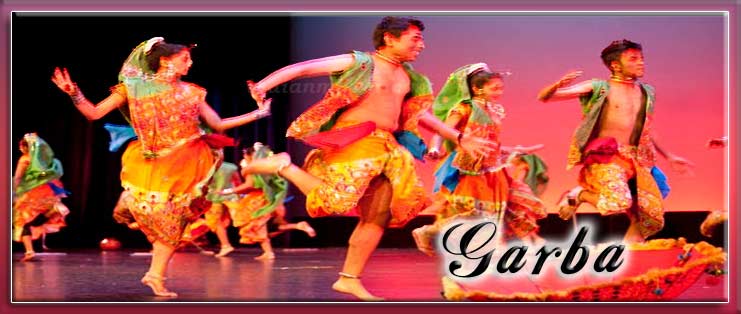
Garba dance is originally a popular folk dance of Gujarat. This dance form has connection with Shakti-Puja and its origin is believed to be in the worship of goddess Jagdamba. It is played in a circular form performed by ladies on the nine nights of Navaratri festival, Sharad Purnima, Vasant Panchami, Holi and such other festive occasions and it continues till midnight. The word Garba is derived from the word 'Garbha Deep' (a lamp inside a perforated earthen pot). The light inside the perforated earthen pot symbolizes the embryonic life. This also signifies value of knowledge (light), as opposed to the darkness (ignorance). It is said that just as Lord Krishna popularized the Ras dance, Usha the grand daughter-in-law of Lord Krishna is credited to have popularized Lasya Nritya, which is known today by the name of Garba dance. 


Garba - Indian Folk Dance , Garba Dance, Garba Dancers, Dance

garba | dance


In this folk dance, the women place the pot known as Garba with the lamp on their heads and move in circular direction, singing and clap at the same time or even snap their fingers, to the accompaniment of folk instruments. A betel nut and a silver coin are placed within the pot, termed as Kumbh, on top of which a coconut is placed. Even in some villages of Gujarat, one would find the tradition of a "Light" (Deevo-Kodiyun) in an earthen pot with the holes all around, placed in the center on a stool and colourful dressed ladies dancing around it by clapping their hands and singing Mataji's songs. Garba songs are devotional mostly in praise of Mother Goddess Jagdamba describing her form, powers, and invoking her blessings. But in some songs description about seasons and social themes of domestic life is also found. Folk poets compose Garba songs, which are lyrical poems sung in praise of Lord Krishna. Singing together is an invariable accompaniment of Garba Nrtiya. Other forms of Garba are Deevo, Ghado and Garbi. 


15 Most Famous Traditional Folk Dances of Indian States

Most Famous Traditional Folk Dances of Indian States


The actual dance performance begins at night and all the participants gather at the open space or at street corners. An idol or photograph of the goddess is kept in the centre and a circle is formed around it. Ghee and oil amps are lit in front of Mataji's Sthanak, which is put in the Chowk. At initial stages dancing begins with slow tempo and reaches at a fast tempo. A Dholi or drummer who sit in the centre keeps the rhythm. Some times, the women also carry 'Mandavali', on their heads and it is made up of bamboo chips covered with a red silk piece of cloth. The Mandavali symbolizes the goddess and they dance with it for some time and later put it in the centre. 


Garba Dance of Gujarat

5 popular folk dances from Gujarat


Generally, in Gujarat, the women wear sari in their Gujarati style. However, in different parts of Gujarat, every community wears different style of clothes. In Saurashtra region, women wear artistically embroidered petticoats (Ghaghara), a backless choli (Kapdu) and a head cover (odhani) with lots of silver on their head. Males wear Kediyum (shirt) Vajani (trouser) and Rumal a printed headpiece with on the waist, neck and hands. The musical instruments used for Garba are mainly the drum, harmoniums and Nal. 


Gujarat Dances - Gujarati Dances

Garba and Raas - Gujarat


Garba performance has spread beyond Gujarat to enjoy popularity not only in many other parts of India but in Hindu communities worldwide. The dances are widely performed at the Holi spring festival. Especially since the late 20th century, there has been a notable proliferation of garbacompetitions and university dance troupes. Folk dances similar to garba can also be found in other parts of India, particularly in Tamil Nadu, in the southeast, and in Rajasthan, the northeastern neighbour of Gujarat.


Folk Dances of Western India | Dances of India |

Folk Dances of India GARBA


Instruments

Damru, Tabla, Nagara, pot drum, percussion, Ektaro, Ravan hattho, Jantar, Pavo, shehani, murli, turi, and taturi


LEARNING THE GARBA


PANGHAT PEFORMING ARTS 
E-502 SHRIJI ENCLAVE ,OPP SAJAN APPARTMENT , ANANDNAGAR CHAR RASTA , SATELLITE , AHMEDABAD- 380015
PH:+(91)-7926920188
EMAIL:INFO@PANGHAT.ORG

ARYA DANCE ACADEMY
PHONE:TOLL FREE 866-279-2468 OR 973-402-4655
FAX: 973-402-2281
REGISTERING FOR DANCE CLASS DANCE@ARYAINTL.COM
PERFORMANCES FOR SHOWS/EVENTS NIKI61@ARYAINTL.COM

KALA RYDHAM NRUTHYA ACADEMY 
8, SRUJAN FLAT, NR.C.N. VIDHYALAY, AMBAWADI,AHMEDABAD.380006
PH:+91-99092671788

EMAIL: INFI@KALARYDHAM.COM